
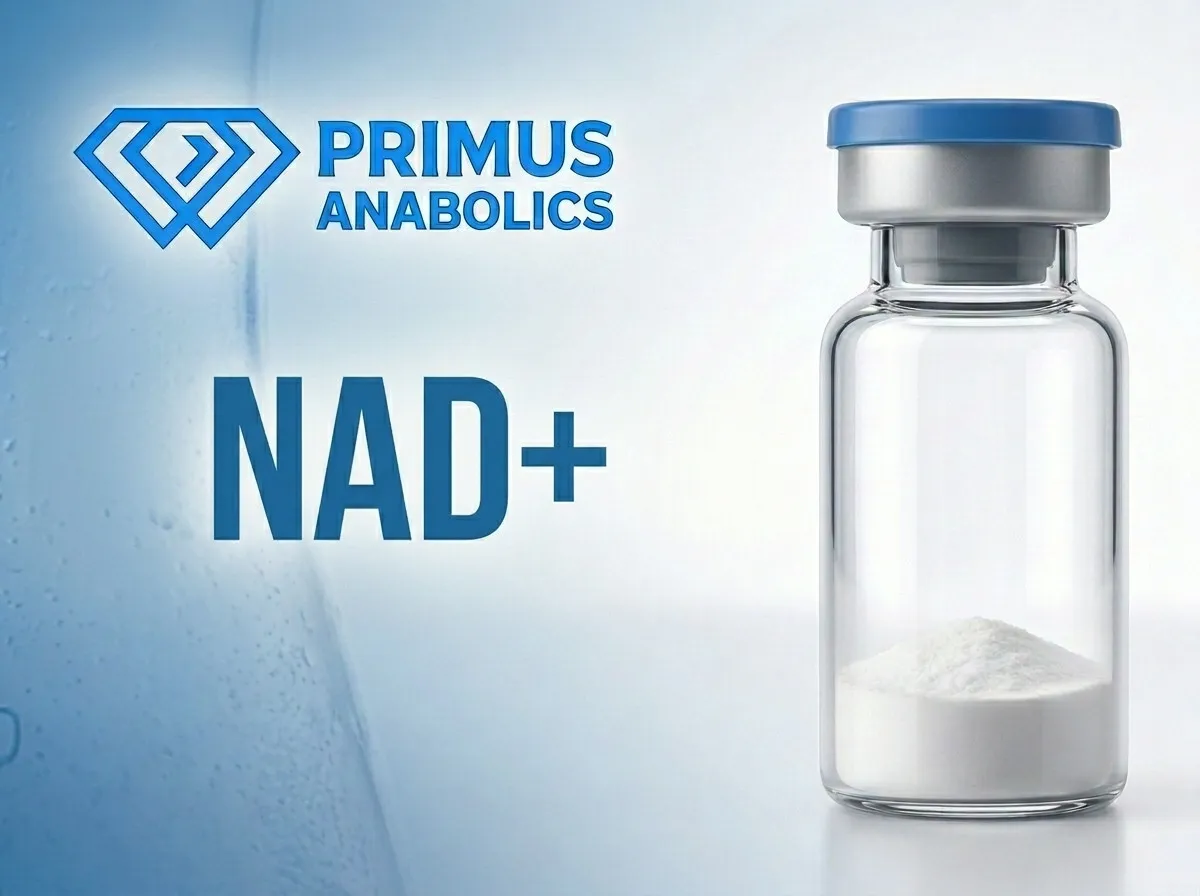
NAD+
The longevity molecule
Quickstart – Key Points
NAD+ (nicotinamide adenine dinucleotide) is a key coenzyme involved in cellular energy metabolism, DNA repair, and mitochondrial function.
Clinical research has primarily used high-dose intravenous infusions, although lower-dose subcutaneous administration is emerging as a practical maintenance alternative.
This educational protocol presents a daily subcutaneous approach with gradual titration to improve tolerance.
- Reconstitution: Add 3.0 mL of bacteriostatic water → 333.3 mg/mL concentration.
- Typical daily range: 50–100 mg once daily subcutaneously (with progressive increase from low doses).
- Easy measurement: At 333.3 mg/mL, 1 unit = 0.01 mL = 3.33 mg on a U-100 syringe.
- Storage: Lyophilized: freeze at −20 °C; after reconstitution, refrigerate at 2–8 °C for up to 14 days; protect from light and avoid freeze-thaw cycles.
Dosage and Reconstitution Guide
Educational guide for reconstitution and daily dosing.
Standard approach / gradual titration (3 mL = 333.3 mg/mL)
- Week 1: 50 mg → 15 units (0.15 mL)
- Week 2: 75 mg → 22.5 units (0.225 mL)
- Weeks 3–8: 100 mg → 30 units (0.30 mL)
- Weeks 9–12: 100 mg → 30 units (0.30 mL)
- Weeks 13–16: 100 mg → 30 units (0.30 mL)
Frequency: one daily subcutaneous injection. Start at 50 mg to assess tolerance, as starting too high can lead to effects such as insomnia, anxiety, or fatigue. Most people tolerate 50–100 mg well after adaptation.
Reconstitution Steps
- Let the vial reach room temperature before opening
- Draw 3.0 mL of bacteriostatic water with a sterile syringe
- Inject slowly down the side of the vial, not aiming directly at the powder
- Mix gently (do not shake hard) until completely dissolved
- The solution should be clear and colorless; if not, discard
Label with the date and refrigerate at 2–8 °C, protected from light. Use within a maximum of 14 days.
Note: 1 unit ≈ 3.33 mg
Examples:
- 50 mg = 15 units
- 75 mg = 22.5 units
- 100 mg = 30 units
Important: this guide is educational only and is not medical advice. For research only. Not for human consumption.
Required Supplies
Vials (NAD+, 1000 mg each):
- 8 weeks ≈ 6 vials
- 12 weeks ≈ 8 vials
- 16 weeks ≈ 11 vials
Bacteriostatic water (10 mL):
- 8 weeks: 18 mL → 2 bottles
- 12 weeks: 24 mL → 3 bottles
- 16 weeks: 33 mL → 4 bottles
Protocol Summary
- Objective: support cellular energy metabolism, DNA repair, and mitochondrial function.
- Duration: 8–16 weeks.
- Dose: 50–100 mg daily with progressive increase.
- Reconstitution: 3 mL per 1000 mg vial.
- Storage: frozen if lyophilized; refrigerated after reconstitution; use within 14 days.
Dosing Protocol
- Start: 50 mg daily
- Increase: +25 mg in week 2 (75 mg)
- Goal: 100 mg daily from week 3
- Maintenance: continue at 100 mg according to tolerance
- Frequency: 1 time per day
- Schedule: preferably at the same time (many prefer in the morning)
- Rotation: change injection sites
Storage
Reconstituted: 2–8 °C, use within 14 days Check clarity before each use
Important Notes
- Use a new syringe for each injection
- Rotate sites to avoid irritation
- Clean with alcohol before use
- Inject slowly
- Record dose and effects
- Start low (50 mg) to evaluate tolerance
How it works
NAD+ is an essential coenzyme in energy production reactions (glycolysis, Krebs cycle, and oxidative phosphorylation), as well as in cellular repair and mitochondrial biogenesis processes. Its levels decrease with age and metabolic stress, which can affect cellular function. Most clinical studies have used high-dose intravenous infusions, but lower-dose subcutaneous injections are gaining popularity as maintenance. This protocol proposes daily use with progressive increase to improve tolerance.
Potential Benefits and Side Effects
Benefits:
- Support for cellular energy production
- Potential improvement of mitochondrial function
- Possible cognitive and metabolic benefits
Side Effects:
- Insomnia, anxiety, or fatigue if the dose is increased too quickly
- Reactions at the injection point
- Mild pain, redness, or itching
- Possible headache or feeling of warmth
High doses (>200–300 mg/day) should be used with supervision.
Lifestyle Factors
- Diet rich in vitamin B3 and tryptophan
- Strength training and cardio
- Sleep 7–9 hours
- Stress management
- Reduce alcohol consumption
Injection Technique
Preparation:
- Wash hands
- Clean vial and skin with alcohol
Needle:
- Insulin syringe (28–31G)

Procedure:
- Pinch the skin
- Insert needle at ~45°
- Do not aspirate
- Inject slowly (5–10 seconds)
- Wait a few seconds before withdrawing
- Press gently
Rotation:
- Alternate sites (abdomen, thighs, arms)
- Avoid always using the same point
Volume:
- 0.15–0.30 mL per injection
- If higher doses are used, divide into several injections